
More Basil Please!
July is the time to add another round of basil starts to your garden, to make sure you have plenty of delicious leaves for fall harvest.
Nothing says summer in the garden like the smell of basil, and no herb garden – in fact, no garden – would be complete without at least one basil to enjoy the fragrance and flavor of this perfect plant. The botanical name Ocimum basilicum, commonly called sweet basil, makes perfect sense for this beloved herb. The genus comes from the Greek word Okimon, meaning smell. The species name, basilicum, is the Latin translation of the Greek word basilikon, meaning king. I think we can all agree that basil is the king of fragrances– just rubbing the leaves of sweet basil brings our thoughts to pesto, Caprese salad, and an idyllic trip through rural Italy.
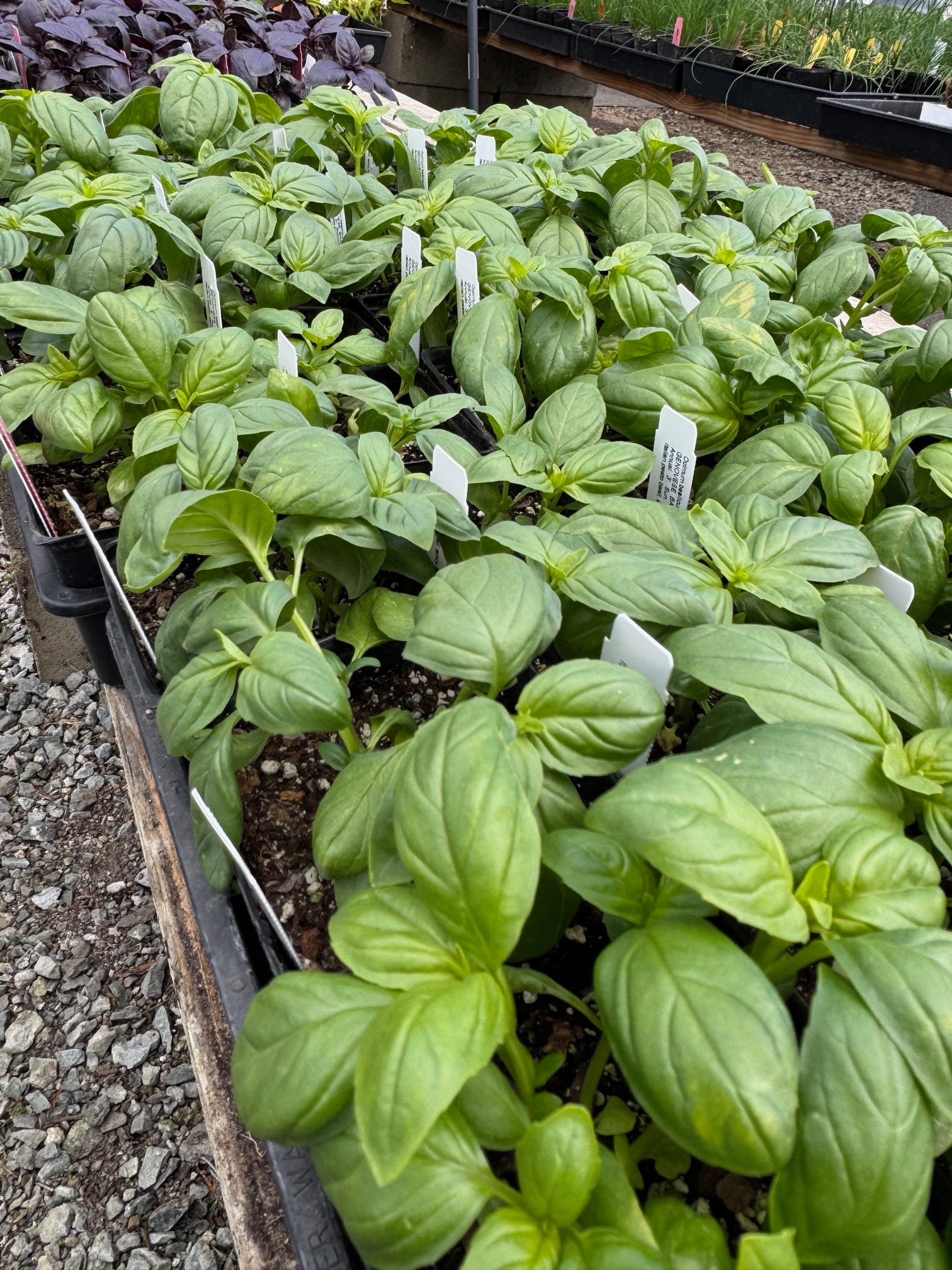
Basil is native to Africa, Asia, the Middle East, the Caribbean, and South America and arrived in Europe about two thousand years ago. It was originally popular for its supernatural and magical powers and only became a popular culinary herb over the last 500 years. An accidental misreading of the Greek word basilikon with the word basiliskos, which was a fabled, lizard-like, fire-breathing monster, may have been one of the reasons early Europeans were frightened to use basil in their cooking (see, spell check was a problem even in ancient times!). But eventually, basil began to take hold in popularity, and many of the basils we now grow have been in horticultural use for several hundred years.
There are at least 15 species of basil and hundreds of varieties, with new varieties available every year to try. Most varieties are grown easily from seed, germinating in 5 to 7 days. It is an annual in most areas, although if you live in a temperate or subtropical climate, it can be a perennial. Basils are big feeders and need more fertilizing than perennial herbs. If you are growing basil in containers, supply both a slow-release fertilizer when you first plant, as well as liquid fertilizers every 2 to3 weeks, depending on the pot size and how often you need to water. If growing in the ground, incorporate compost and a slow-release fertilizer at planting, and apply liquid fertilizer every 3 to 4 weeks to maintain healthy plant growth. Organic dry fertilizers and fish emulsion are preferred. This may seem extreme, especially since with perennial herbs such as oregano and rosemary, you may only fertilize once a year! Think of basil as a hungry teenager, and if it doesn't get enough nitrogen and water, it wants to send up pretty flowers, get pregnant, have babies, and get old. Your job is to keep it young and in school, so you can make lots of delicious food and drinks with it.
We grow many varieties of basil at Morningsun, and I never grow tired of describing their many scents, flavors, leaf and flower colors, and uses to new herb gardeners. A simple question of ‘Do you have any basil for sale?’ or ‘What’s your favorite basil?’ can lead to a rather lengthy walk, complete with tasting and smelling, through the nursery gardens and greenhouses. It is always a delight to watch someone start with an appreciation of basil grow passionate about the plant as they discover so many possibilities in the world of Ocimum. What about lemon basil-infused gin, lettuce leaf basil wraps of fresh mozzarella and sungold tomato, Thai-style noodles with shrimp and Thai basil, cinnamon basil chai shortbread cookies, and tulsi basil tea? From appetizers to after-dinner tea, there is a basil to fit your wildest culinary fantasies.
I think of basils in 5 categories: sweet flavored, small leaved, purple leaved, specialty scents and flavors, and sterile. The sweet varieties such as ‘Genovese’ or ‘Italian Large Leaf’ have the classic flavor and look of basil, but if you have problems with diseases such as downy mildew or fusarium, try more resistant varieties like ‘Aroma’ or ‘Emerald Towers’. We have fallen in love with Emerald Towers as it is perfect for container growing – compact, short nodes between the leaves for more leaf production, disease resistant and slow to bolt, but maintaining a classic Genovese basil flavor.
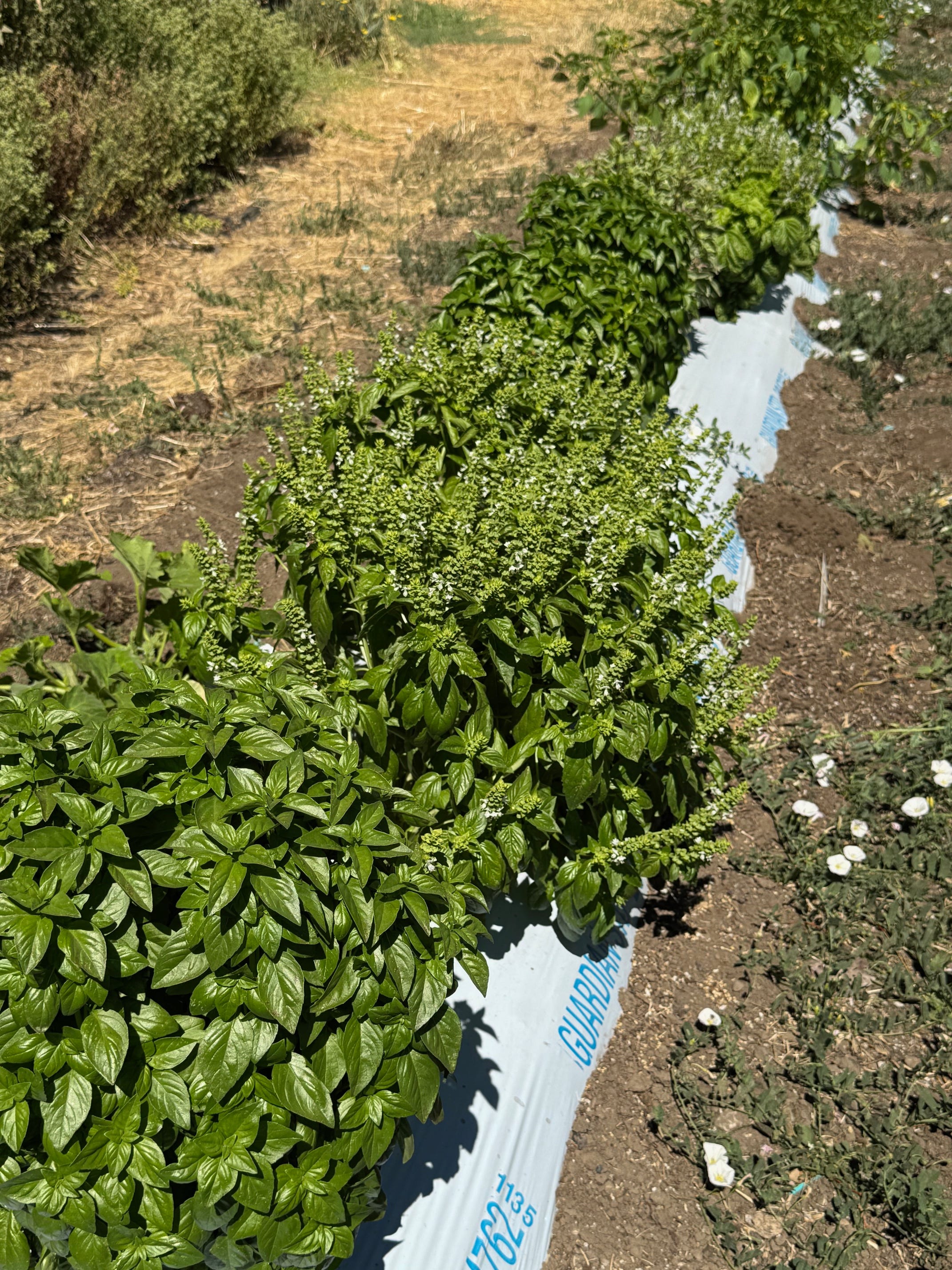
The lettuce leaf varieties of basil, such as ‘Napoletano’, can easily grow to 30 inches tall, with large ruffled leaves growing 5 inches long and 4 to 5 inches wide. Switch out lettuce for these large leaf basils in your sandwiches, burgers and wraps.
On the other side of the size spectrum are the small leafed or dwarf basil varieties. Ocimum ‘Spicy Bush’ only grows to 12 inches and is perfectly rounded. Perfect to edge an herb garden bed, this basil will flower quickly but can be pruned back to keep in a beautiful ball shape. The flavor is heavier than sweet basils, and thicker with a spicy mint flavor. It is delicious on pizza or appetizers, and the flavor doesn’t fade when it is heated or cooked.
Purple leaf basils range from mottled purple and green, like the heirloom Ocimum basilicum ‘Amaratto’, to deep purple, such as the Genovese type basil Ocimum ‘Amethyst’ or Italian large leaf type Ocimum ‘Red Rubin’. Excellent as salad greens, they are also infused into vinegars to impart both a basil flavor and a stunning pink shade to the vinegar. They are wonderful as edible garnishes, with pink blooms that can be added to flower bouquets.
The specialty basils encompass a huge range of varieties, from citrus to clove to licorice, each with a different flavor profile. I cannot have a garden without Ocimum basilicum ‘Mrs Burns Lemon’ in it. This is a basil that has been in production for over 60 years, for good reason. The lemon flavor is huge, with an undertone of cinnamon and mint, and the plant is generously sized so multiple batches of lemon pesto, lemon basil ice tea and lemon basil infused vodka can be made each year. Ocimum basilicum ‘Cardinal’ is my other new favorite. I first viewed it at a Master Gardener test garden, full grown and in full bloom. It is a robust Thai style basil, heavy with the spicy flavor of clove and anise. The flower spike is the show stopper though – short and squat, in rich deep purple. Each spike can be three to four inches wide, and as a cut flower adds both fragrance and color to a summer bouquet.
I can hear the basil growers out there all shuddering at the thought of flowers on basil plants. Of course we need to keep flowers pinched off and plants pinched back to keep them shrubby and productive, but the flower farmers have discovered the beauty of fragrant basil flowers in bouquets; chefs and mixologists are mixing, sprinkling, infusing and muddling basil flowers into new culinary sensations, and the bees adore basil flowers, so why not expand your basil garden beyond your traditional culinary uses?
This is where the new sterile basil varieties can be showcased in your garden. Ocimum ‘African Blue’ (Ocimum ‘Dark Opal x O. kilimandscharicum) was a chance seedling found at Companion Plants Nursery in Athens, Ohio. It typically grows to 3 -4 feet tall and wide, with green leaves and purple veining, and blooms with large purple flower spikes and lavender flowers. It will grow and flower almost continuously throughout the growing season, much to the delight of the many bees that will visit it. It is a stunning garden specimen and excellent for bouquets. Although it is considered an annual it does overwinter in the more temperate regions, and is also more forgiving as a winterized houseplant than the seed grown basils. The leaf scent and flavor is a bit heavy with camphor, and is generally considered an inferior selection for cooking.
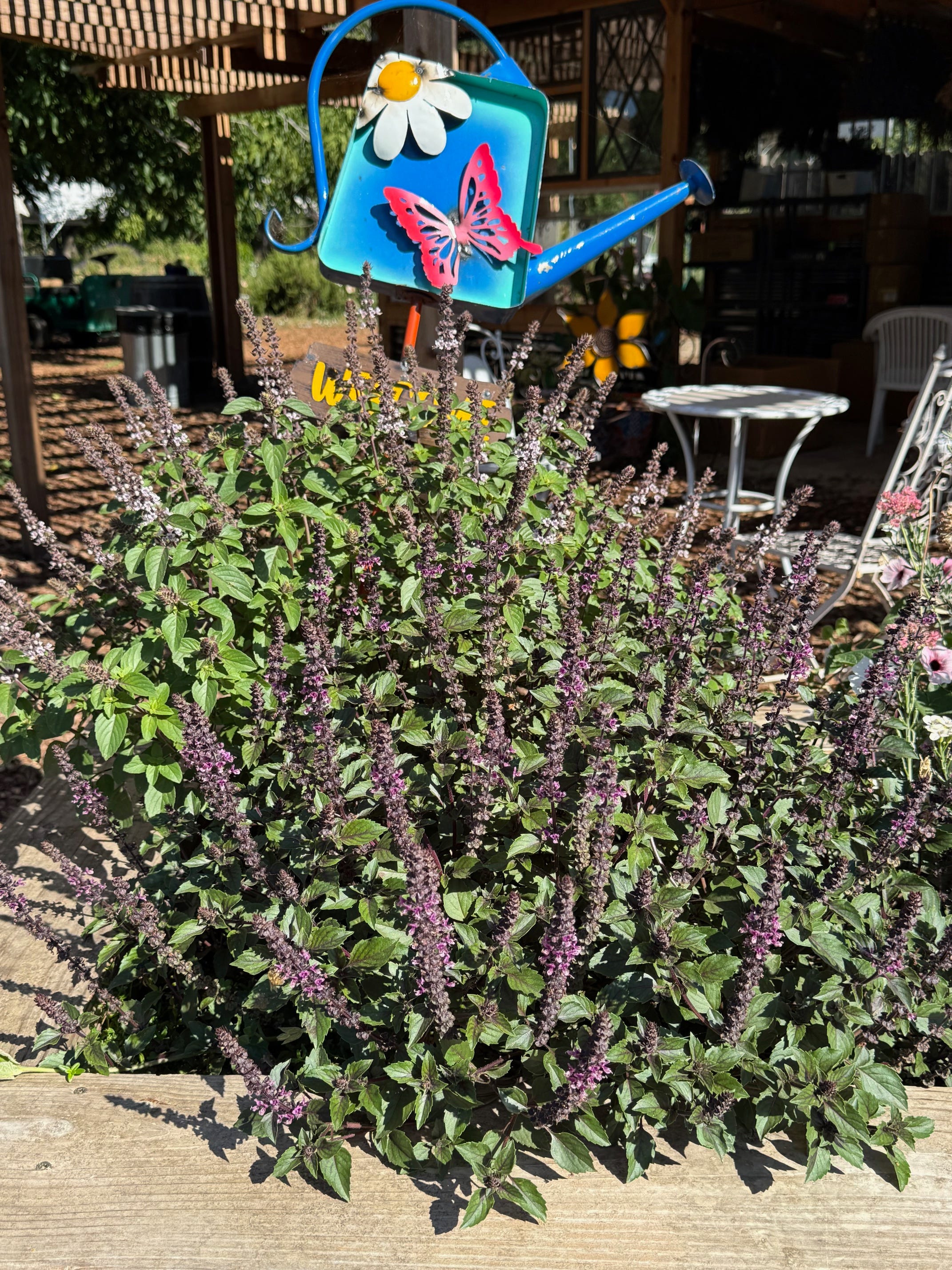
There are several newer sterile selections that are attractive in pots or in beds, disease resistant, produce stunning flowers, culinary worthy, fairly disease resistant, and will tolerate more extreme hot and cold conditions. My favorite is Ocimum Herbalea ‘Wild Magic’, a patented sterile basil that grows to 18 inches tall, well branched with deep violet green leaves, plum-black new growth, dark stems covered with deep pink blooms, a delicious spicy flavor, great tolerance to fusarium disease, good vigorous growth and bloom over a long season, will tolerate slightly drier soils than other basils and looks good even when temperatures drop down to the low 40s. In our central California garden ‘Wild Magic’ looks and tastes good and is blooming usually until late December when we get a hard freeze, and will tolerate life as an indoor plant during the winter. It is really a hard working herb! Ocimum Herbalea ‘Magic Mountain’ is a lovely complement to include alongside ‘Wild Magic’ in the garden or in containers, with a deeper green leaf, light pink bloom, and milder flavor.
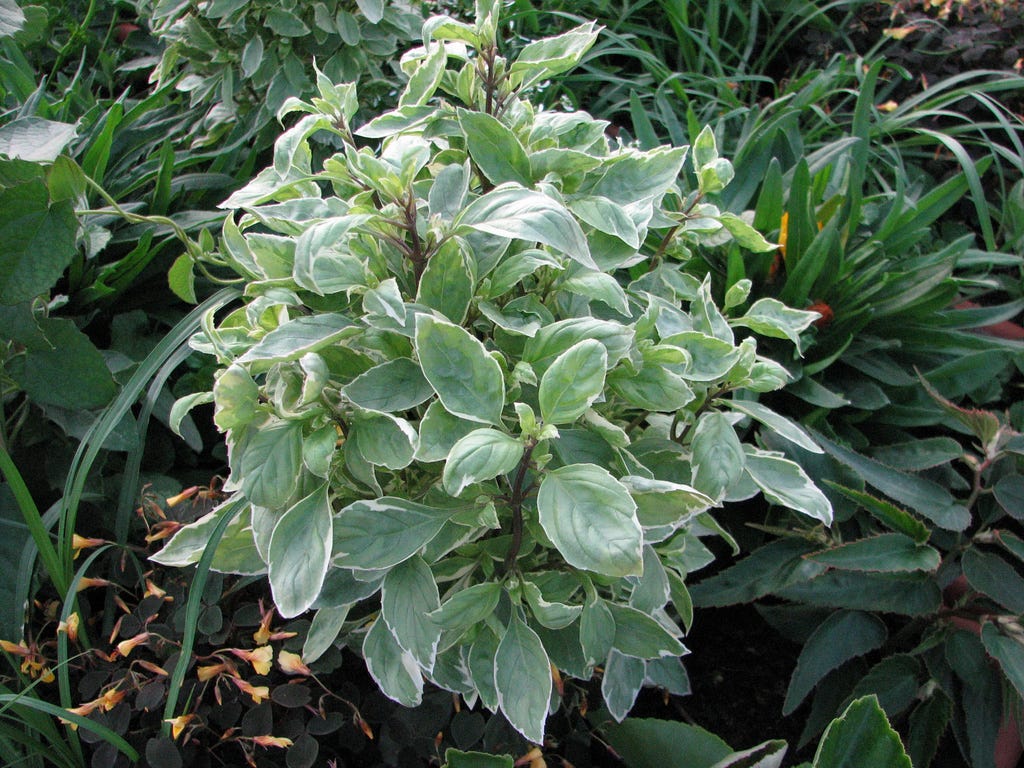
On the other side of the spectrum is Ocimum ‘Pesto Perpetuo’, a variegated non blooming Genovese style basil. It is such a stunning plant in the garden, shining as a container plant, even tucked into mixed pots of perennials or herbs. It will not bloom, giving the absent gardener the opportunity to enjoy basil at its highest quality.
The largest basil I grow in the garden at Morningsun is a tulsi basil known as ‘Vana’. There are so many varieties of tulsi,or holy basil that it is difficult to choose just one, but Ocimum gratissimum ‘Vana’ is so large in the garden it is difficult to ignore. Growing to five feet, with large fuzzy green leaves, maroon stemmed flowers and a very strong lemon/licorice/clove/mint scent, I can’t help but think of tea every time I walk by it. It is woody stemmed, and lives in my zone 9b garden until mid December. It is stunning to look at, and I find even a pinch in a tea adds an amazing burst of flavor.
Basil always reminds me of my father. My father (his name was Leroy, ‘the king’, and yes, our little donkey is named after him) did not discover basil until later in life, when he was in his 60s. He always had a huge garden, and I learned so much about vegetable gardening from him. I introduced him to basil though, and once he started growing it, there was never again a day without pesto. I think of him standing in his garden with his basil plants, telling me in his Missouri accent that if he had a million dollars he would spend it all on basil. Of course, basil seed and transplants are very reasonably priced, he was a fabulous gardener growing in amazing soil, and so didn’t need to spend much money to have a huge supply of the king of herbs.
For even more information about basil, check out a short video on our website.
____________________________________________________________________________
4th of July Weekend Plant Sale
On Thursday July 3rd, as well as Saturday and Sunday July 5th and 6th, we are having a sale on all our plants! We are closed on Friday July 4th, to celebrate the holiday.
We have a huge selection of basils, and to encourage you to plant plenty, the sale is BOGO on all our basils! So take a chance and try a new basil, or grab more of your favorites!
All other plants, including all of our fruit trees in stock, California natives, herbs and perennials, are 20% off. It has been a strangely nice summer so far, with very little whining about the heat, and our plant selection is the best it has been in many years. Does your garden need a pop of summer color? Are your bees, butterflies and hummingbirds hangry? Need some fragrance in your garden or some new herbs to grill with? We have some great choices.
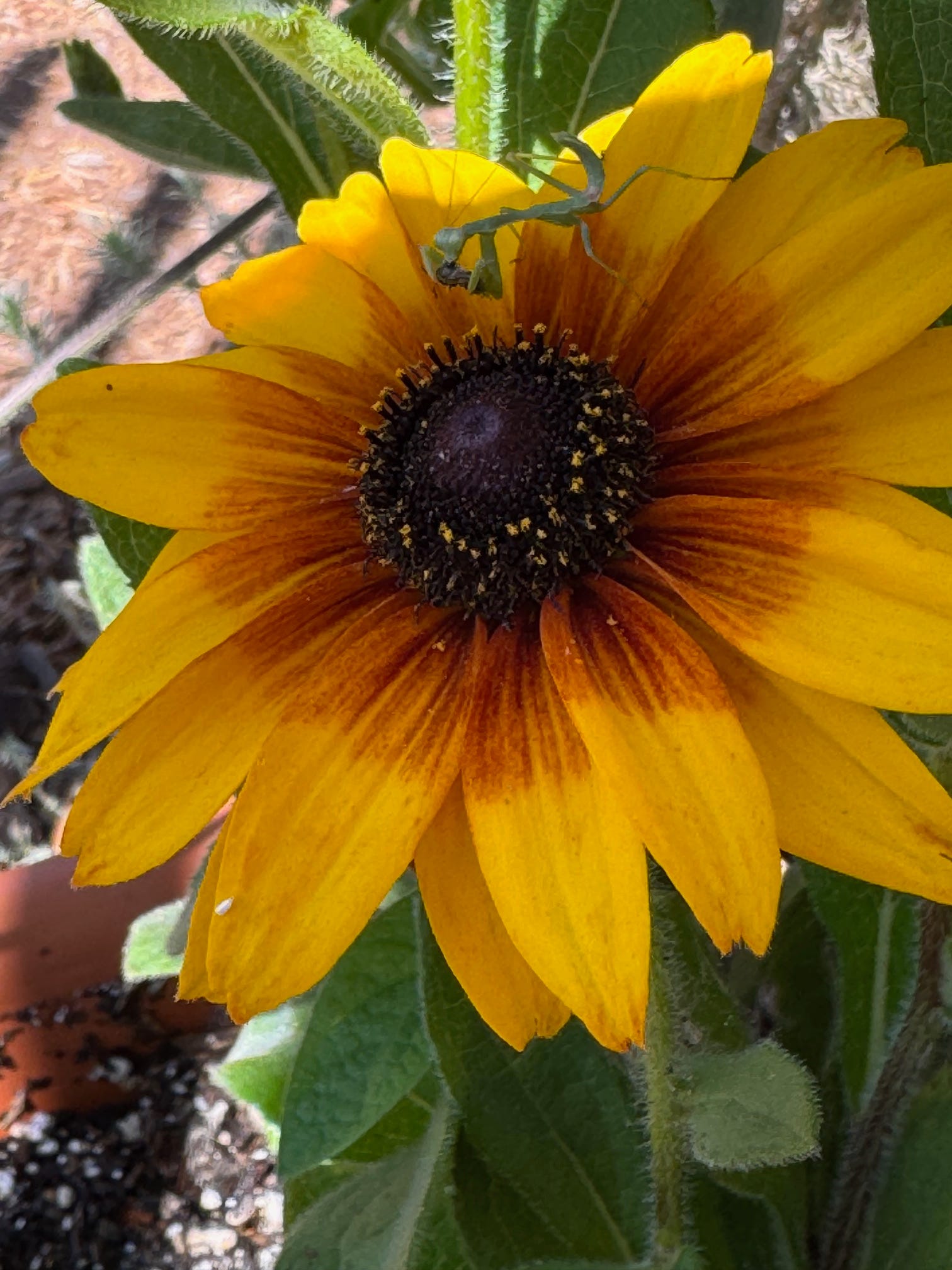
Rudbeckia plants with a friendly praying mantid enjoying a treat.
____________________________________________________________________________
Classes Returning in August
We are taking a break on classes for July, but classes will return in August. A great evening of herbal cocktails and boozy ice cream, a medicine making weekend, broom making, pickle making, and more. Click here for more information.