Late Summer Garden Refresh
Culinary Herbs are Perfect to Spice Up Your Tired Summer Garden
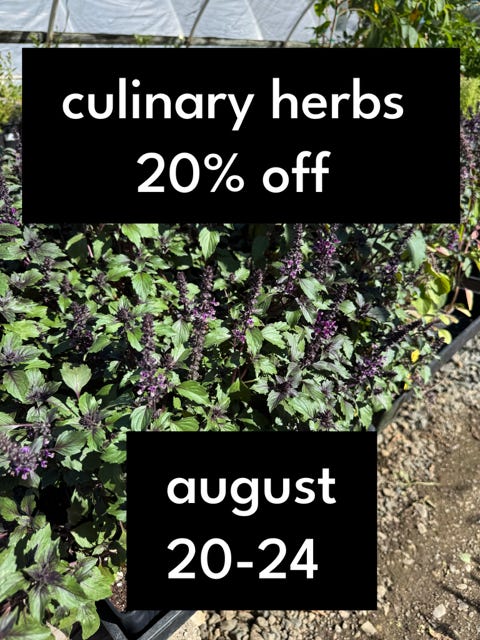
Culinary herbs are useful and beautiful plants to add to the garden at any time of the year, and during late summer they can easily refresh the look of a garden or container. This week, we offer a 20% discount for all of our culinary herbs. It’s super hot on Friday, August 22nd so we will be closing at 3 PM.
I always think about planting perennial culinary herbs at this time of year to be prepared for the busy cooking time ahead in November and December. Annual herbs like basil and herbaceous perennial herbs like French tarragon will be long cut, dried, preserved in oil or vinegar or frozen by the holidays, but the perennial herbs like sage and oregano can be used all winter.
Herbs can take part in any landscaping scheme from the simplest planting at the kitchen doorstep to elaborate formal designs of great tradition. The myriad of shapes, colors and textures of herbs offer many possibilities as ground covers and as border and background subjects,as well as being the star of the garden. Even a patio or deck can be adorned with culinary herbs growing in attractive containers, lovely to look aat and useful.
Site Selection and Soil Preparation: Any well drained sunny site will work for herbs. Generally herbs are not particular about soil type so long as it drains well. Poor soils(low fertility) tend to produce highly aromatic foliage, while richer soils produce less aromatic, but more abundant foliage. All soils will benefit from the addition of organic matter such as compost, manure or peatmoss, dug in to a depth of at least 8 inches. Remove all weeds and debris from the surface.
Although most herbs grow in full sun many will adapt well to partial sun sites as well. Some shade tolerant herbs such as chervil, curly parsley, mint, dill, cilantro, and sweet woodruff will thrive in partial shade.
Planting the Garden: The usual planting time is in the spring after the danger of frost is past. This is particularly true of the annual herbs such as basil and parsley. But many popular herbs are hardy perennials and can be planted anytime during the growing season, especially in the fall in mild California climate. Develop a layout for the herb garden, keeping in mind the spreading habits of some herbs and the vertical growth of others. Set out herbs in the garden where they are to be planted according to your plan and begin planting. Dig a hole in the garden soil large enough to accommodate the rootball, up to twice in diameter. Add slow release organic fertilizer, then plant the herb, with the stem no deeper into the soil than the existing depth. Plant the plant so water drains away from the main stem. If the roots are circling around the pots, be sure to tease the roots apart, or even cut the roots about 1 inch deep lengthwise along the bottom of the plant. Water the planted area thoroughly, fertilizing lightly with a liquid fertilizer such as fish emulsion if you did not add a dry fertilizer.
Watering: Frequent, light spraying is not a good way to water. It is better to water, either with a sprinkler or with soaker hoses or drip, less frequently but thoroughly, so that the water penetrates deeply. Water should penetrate 8-12 inches to reach roots. The goal is for most herbs watering once or twice a week is sufficient.
Harvesting: Annual herbs such as basil and parsley should be harvested frequently to maintain the bushiness of the plants and prevent them from flowering. Perennial culinary herbs have flowers that taste great, so be sure to eat the flowers as well as the foliage! Harvest leaves for drying by cutting small bunches, placing in rubber bands or lying flat on a screen and air drying in a dry shady location for 3 – 7 days, until dry. Many of the perennial herbs can be harvested and used fresh thoughout the winter, eliminating the need for prepping herbs.
Essential Plants for Your Fall/Winter Kitchen Garden
Parsley – (Petroselinum crispum) Biennial. Needs more water and more fertilizer than most herbs, excellent for fall and winter growing, especially flat leaf parsley. Very nutritious.
Cilantro/Vietnamese Coriander/ – (Coriandrum sativum/Polygonum odoratum)Flavor used in many of the world’s cuisines. Cilantro is a cool weather annual, best grown in spring, fall and early winter. Vietnamese coriander is a hardy herbaceous perennial to grow in partial shade to enjoy in spring through fall.
Chives/Garlic Chives – (Allium schoenosprasum/Allium tuberosum) Herbaceous perennial. Great for edible flowers. Great for containers, indoors, sun or part shade, very adaptable. Harvest low to the soil to maintain good growth.
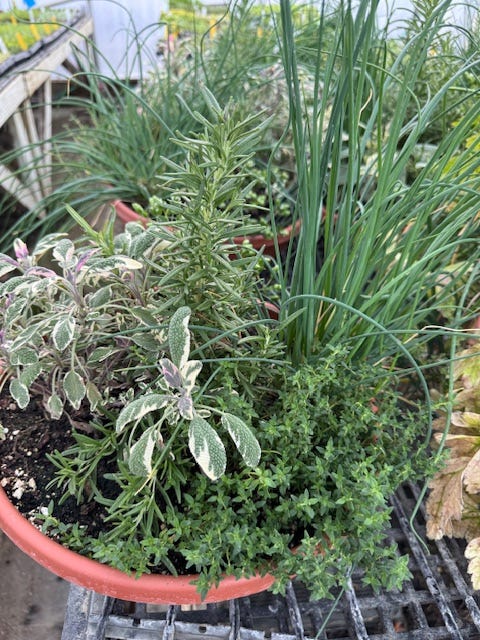
Rosemary – (Rosmarinus officinalis). An evergreen to grow in warm, dry locations. Spicy piny flavor, easy to grow. An important medicinal plant, rosemary is delicious not just for entrees, but salads, soups, even desserts.
Thyme – English (T. vulgaris), Lemon (T. x citriodorus), Caraway (T. herba-barona). Thyme is a sun or part sun loving perennial which tends to be short lived (2-4 years). Excellent plant for containers, windowsills. Average watering to fairly dry conditions. Besides the classic thyme flavor, lemon, lime, caraway and orange are all fun to grow and delicious for fall and winter cooking.
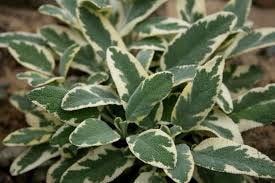
Sage – (Salvia officinalis). Over 750 species, but only one is considered the best choice for culinary. Culinary sage needs dry conditions to thrive. Sage can be a long lived perennial which needs excellent drainage. Prune heavily in early spring to renew growth
Lemon Verbena – (Aloysia triphylla ) – Deciduous shrub, adaptable to sun or part shade. Growing to 3-6 feet, it is excellent for teas, desserts, drinks and more. An important plant for fragrance gardens. Prune to 1 ft tall in early spring.
Oregano (Origanum vulgare)/Marjoram (Origanum majorana). Sun. Herbaceous or evergreen. Oregano is a flavor, not a plant! Try the spicy Greek or Mexican oregano for spicy foods, Italian oregano for spaghetti and red sauces.
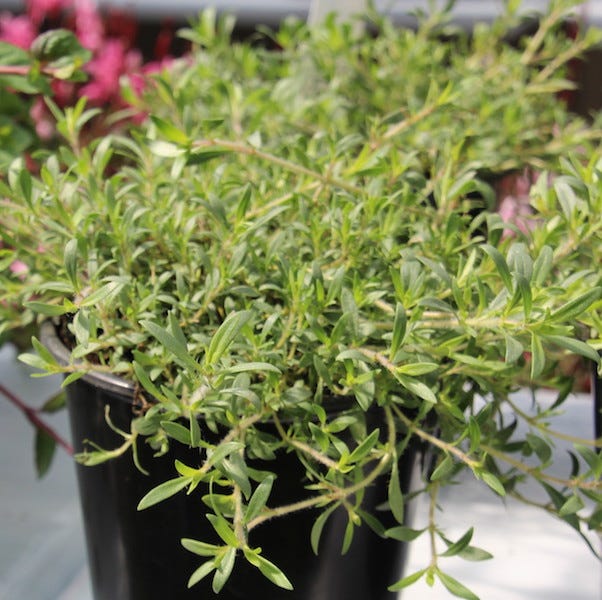
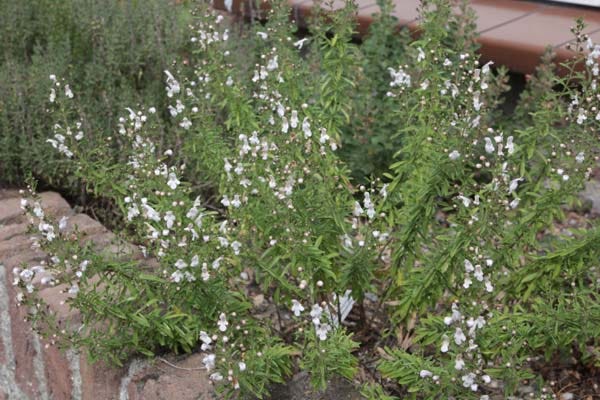
Winter Savory (Satureja Montana). a sun loving evergreen, growing to 8 inches tall with white flowers. Leaves taste like spicy, complex pepper. Easy to grow in containers, as a short hedge, on the windowsill. Try the easy to grow lemon savory to cook with the flavor of lemon pepper
Mexican tarragon (Tagetes lucida) - Mexican tarragon is easy to grow, usually overwintering in our climate as an evergreen. It is actually a marigold, with an edible yellow bloom. It has a sweet anise flavor that closely mimics French tarragon.
What’s Happening This Week at The Farm
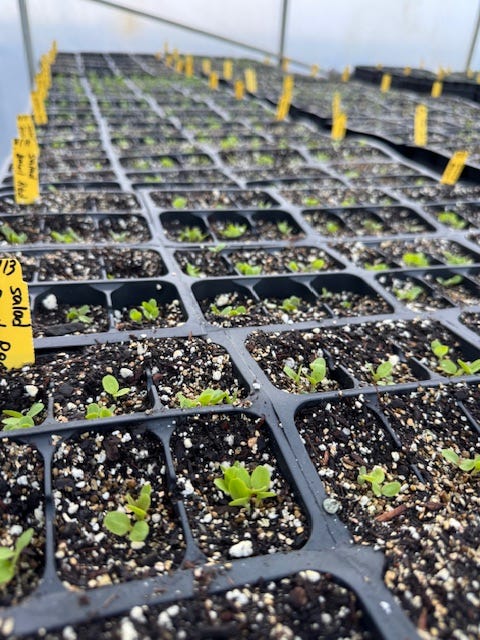
It may be hot today, but soon will be time for fall vegetables. We have started our first round of veggie starts, safely in our cool greenhouse right now. Six packs of many fall vegetables will be coming out right after Labor Day, and we will continue with plenty of veggies - lettuce, kale, chard, broccoli, brussel sprouts, snap peas, mustard, pak choi, onions and more, until mid October. If you haven’t started seed yet, you are not too late, with our late August heat it’s always best to wait until September to avoid bolting. So, the word for planting vegetables at this time of the year is…patience!
Events To Come
Stay tuned to find out what will be available at local farms on Sept 20th. We are planning a tea tasting, and some other special treats for the day.