
Just Because We Are An Herb Farm Doesn't Mean We Only Grow Herbs
The Big Surprise When You Visit the Farm
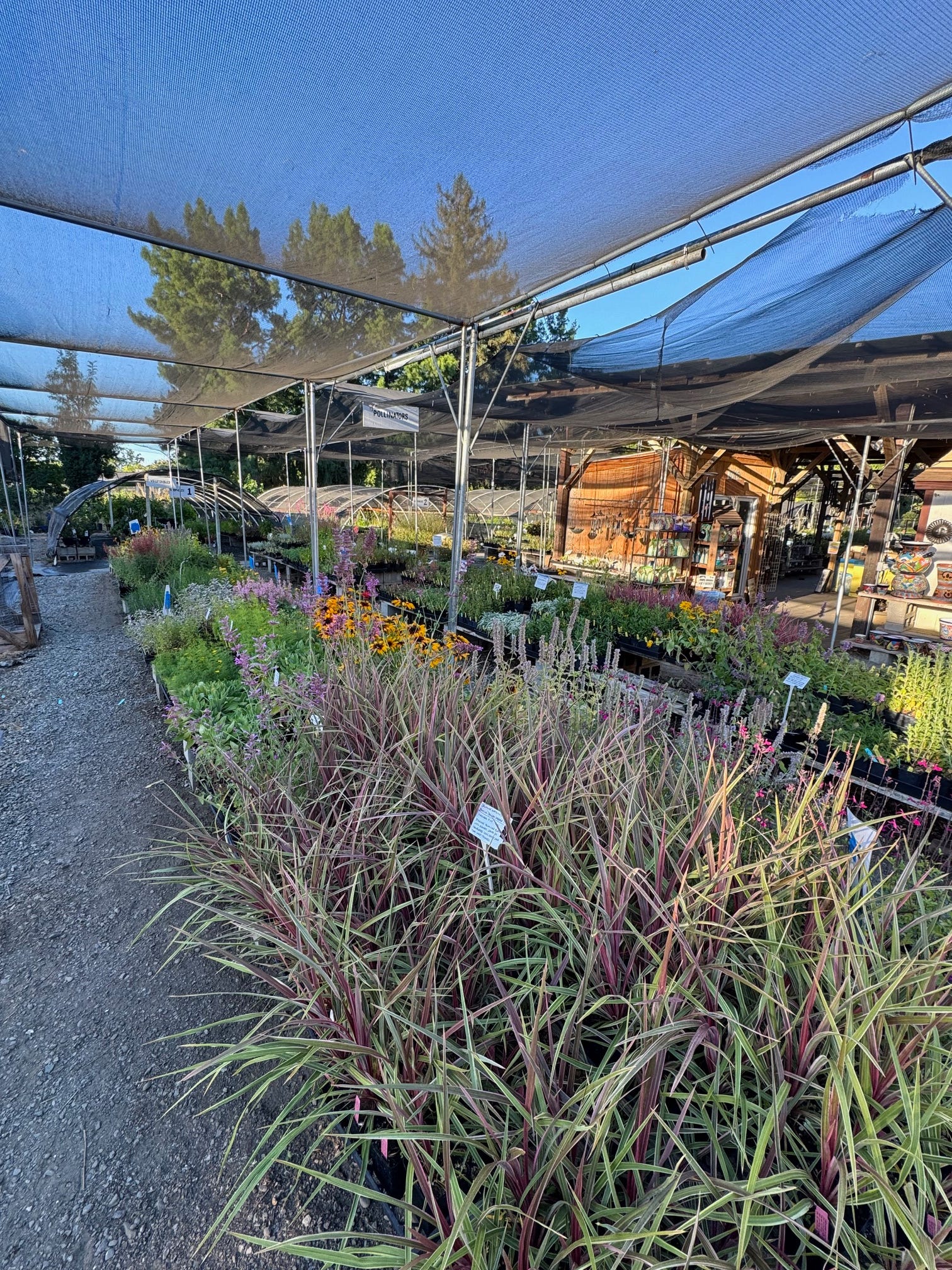
Of course we have herbs galore, but over the past 30 years we have added many other plant choices. First because we love growing many different fun plants at the farm, and second because customers are always asking for the latest gardening trends, old favorite plants they haven’t grown in years, and plants that have peaked their interests. At Morningsun we grow many California natives, all kinds of perennials, especially drought tolerant varieties, plants that will attract all kinds of pollinators, fruit and citrus trees, berries, vegetable starts and succulents. Not everything is edible by people, but all of the plants we sell provide food and habitat for some creature in the garden.
It’s a bit too early in summer still for me to get on my soapbox about the benefits of fall planting, but I talk about it constantly, so expect to read more about the topic soon. It’s never too early to talk about our big Fall Plant Sale, which begins September 17th and runs for a full 3 weeks until October 12th, and is our biggest sale of the year (because it’s a great time to plant!). Our long time customers wait for the sale if they are planning a big garden project, but if you are new to Morningsun, you will want to know now so you can start dreaming and planning to refresh your tired landscaping, or breaking ground on a new area. We do like to prep people for the big sale, so for the next 5 weeks we will feature a different set of plants on sale at 20% discount in case you are a bit impatient and want to get some plants in the ground now, at a good price. The sale prices will be good at the nursery and online.
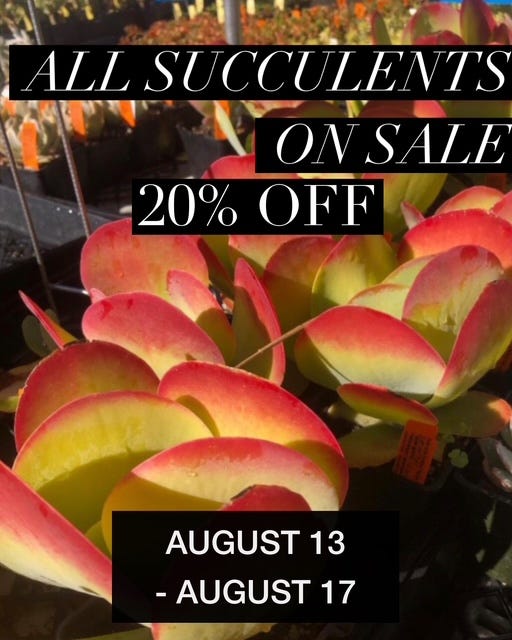
For this week, from August 13th - August 17th, all of our succulents will be on sale. Now, we used to carry just a few varieties, but we just expanded and brought out so many beautiful new succulents for sale, I think there is something for everyone’s garden, container or windowsill.
Why grow succulents, you ask? Well, Aloe vera is always one of our most important medicinal herbs to keep in the kitchen garden, so it makes sense to grow it. One plant growing in a big pot beside the door or in some cases even in a well lit kitchen is the best resource for burns, cuts and scrapes in the kitchen. And since it ‘pups’ out so quickly, removing leaves to use on your skin won’t destroy the plant.
The world of succulents is much larger than aloe vera though. There are over 300 genera of succulent plants in the world, native to every continent except Antarctica. Mexico and South Africa are home to the most succulents. Not surprising, considering both countries have large areas that are very dry and hilly with sandy, well drained soil. Succulents can be very small and petite growing, perfect for growing in cracks or in fairy gardens. Sedum ‘Ogon’ has small golden leaves and will grow well even under shadier conditions. On the other side of the color spectrum and size is Aeonium arboreum ‘Zwartkop’, a multi trunked specimen which grows to 3 feet tall with deep violet black leaves and yellow blooms. Preferring a bit of dappled shade, it’s a striking plant in pots or in rock gardens. One of my favorite easy to grow succulents is Portulacaria afra ‘Variegata’, or Rainbow bush. The small fleshy leaves are pink, green and white on long arching dark red stems. This is a great statement succulent to put in a large pot or a big space in the garden where it can grow several feet tall and up to 4 ft wide. Let it flow over a large space, down a hillside or over a rock wall, with sun or a bit of afternoon shade.
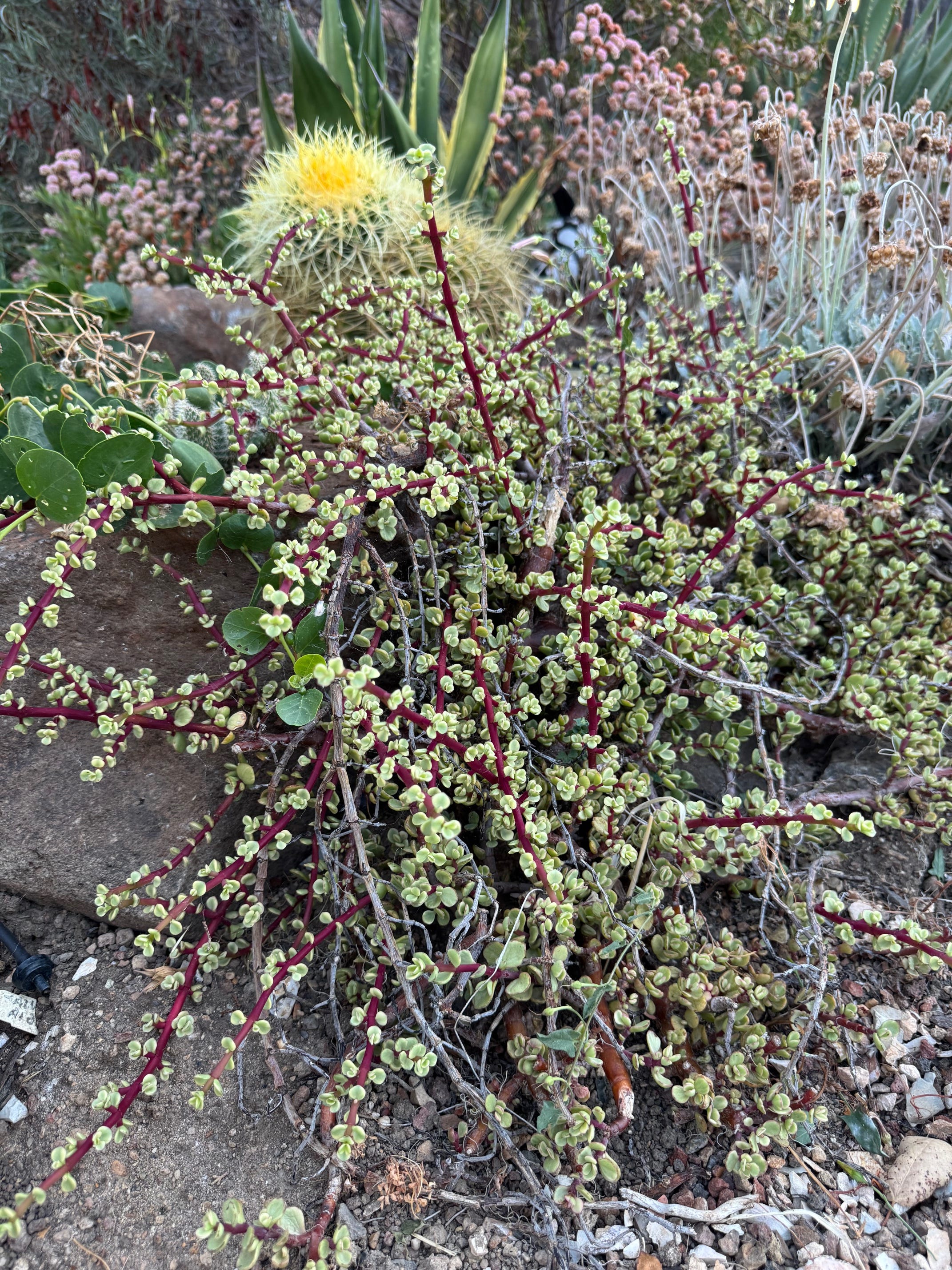
The green version of this plant grows even larger, is super nutritious and tasty, and is a major source of food for elephants in Eastern Africa.
While succulents are generally easy to grow, a few tips can assure success. First and most importantly, don’t assume that succulents like to grow in full, hot sun. Many succulents actually prefer afternoon shade or at least a bit of dappled shade to thrive and to maintain their best leaf colors. Especially lime green and deep purple leafed succulents will thrive with a bit of afternoon shade.
The ability of succulents to grow and be successful as indoor plants is partly due to the fact that many succulents succeed in lower light and low humidity, both normal conditions in our homes. Placing potted indoor succulents in south facing windows or in good indirect light will prevent plants from stretching.
It is obvious that plants should be kept on the dry side, watering well and then allowing plants to dry out between waterings. If the plants are potted, use a cactus or succulent mix which will be extremely well drained. The mix should contain at least 30% pumice or perlite. If you are planting in ground mixing pumice, lava rock, and grit into the native soil to add drainage, with just a bit of compost. Planting on slight berms will also aid in drainage. In some cases cactus mix can be used for building the berm but this is usually more expensive. In rock gardens large rocks can be placed first, smaller rocks strategically around to provide crevices where cactus mix can be placed with succulents. This provides plenty of drainage.
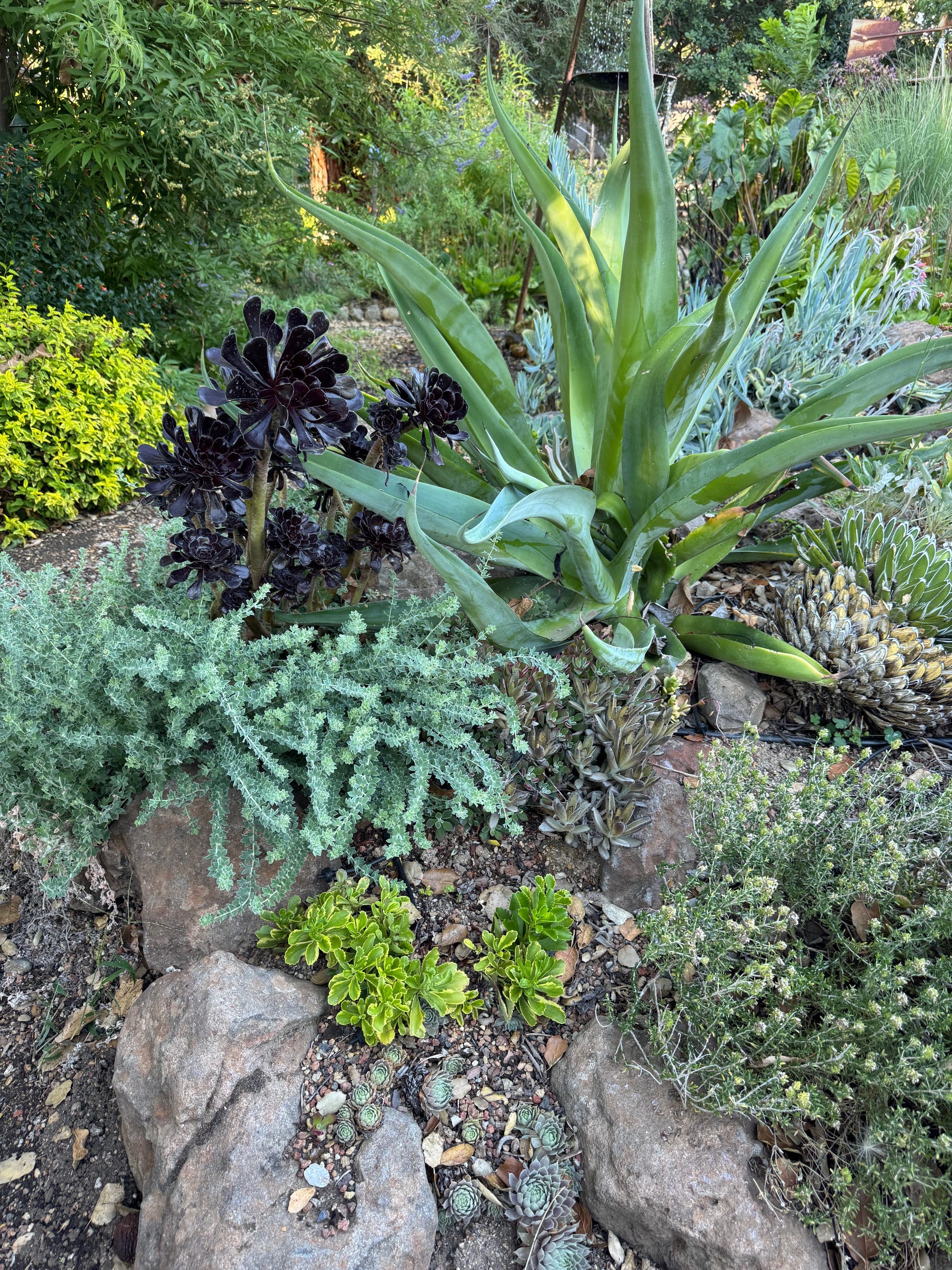
Some succulents are short lived, such as many of the Echeveria and Kalanchoe, which only live a few years but fortunately easily ‘pup’ out with new side growth that can be replanted. Other plants such as Jade plant can easily grow for 25 years, making it possible to use Jade for a bonsai.
Fertilize sparingly, in pots just once every month, or in ground just once or twice a year. Using pebbles around the stem of succulents to keep the plants drier is both functional and beautiful both in ground and in containers. Water deeply and infrequently, trying to keep the foliage as dry as possible. Overwatering will rot the root system and allow insects such as mealy bugs to infest the stem and root system, so it’s important to keep succulents dry.
Start your fall planting a bit early and come out to see us at Morningsun!
September Classes at Morningsun
We have a series of medicinal classes the first weekend of September that are all terrific hands on workshops to both learn about the basics of medicinal herbs and learn the basic skills of how to actually make herbal products you can use internally and externally for yourself and your family. Take just one or all of the classes to learn the basics of tea making, elixirs and tinctures, creams and salves and supplements.
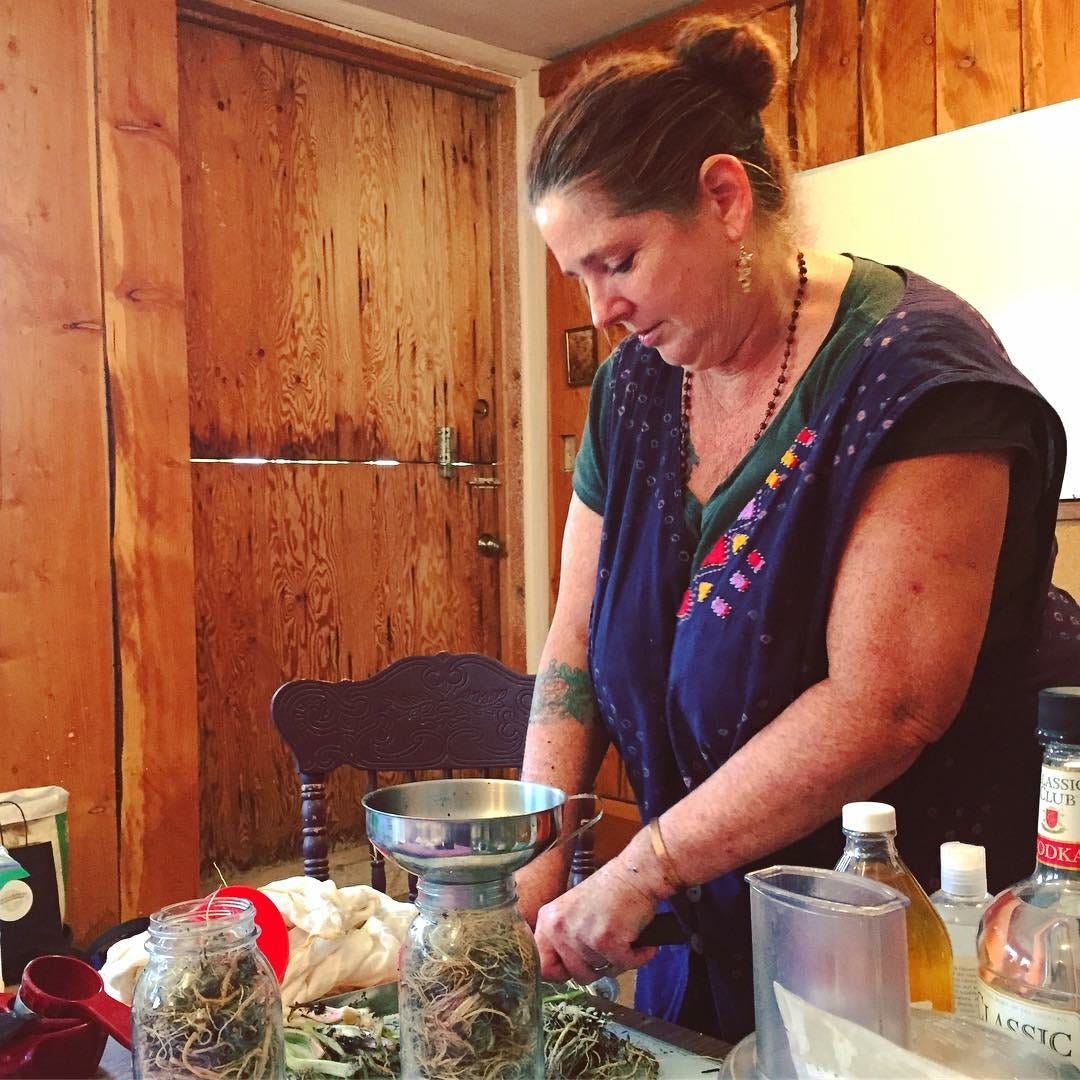
Brita Wynn has been an instructor of herbal medicine and herbal crafts for more than 30 years, currently teaching herbal apprenticeships in Washington. She is also a trained anthropologist and ethnobotanist, so when you leave class you will have the opportunity to learn an incredible amount about the history and many uses of herbs and herbal practices. And if you are interested in a more playful and crafty side of herbs, join Brita for classes on Thursday and Friday when she will be teaching how to make smudges and broom making (great fall projects!).
There’s Always A Project
Today’s project is distilling rose geranium from fresh rose geranium leaves.
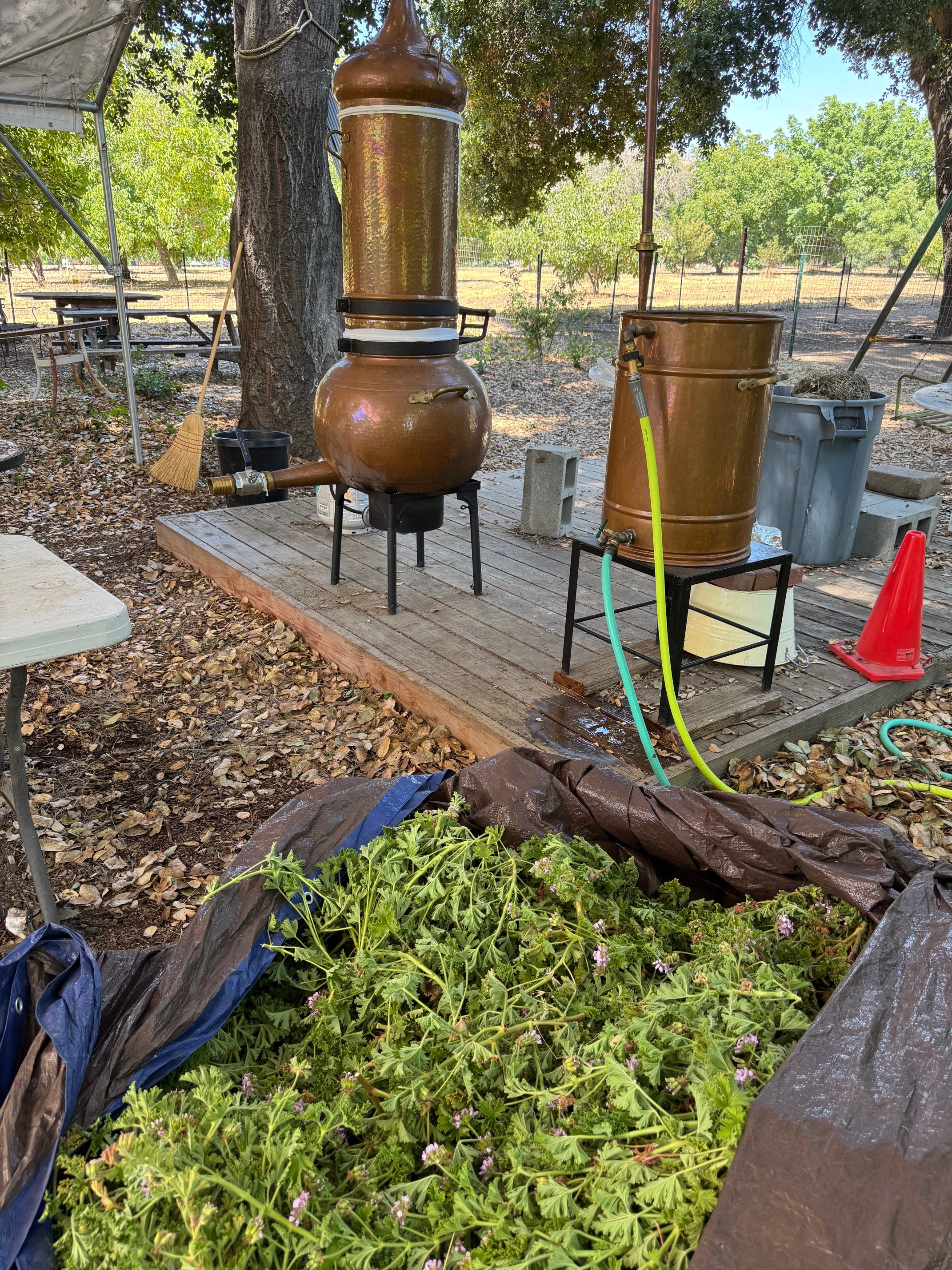
We share the still and all of the products we produce from the still with our farm neighbors, Soul Food Farm, under the business name Hierbas y Flores. We grew a 150 ft row of Pelargonium ‘Attar of Rose’, which we are distilling primarily for hydrosol, or flower water. The fragrance is delicious! Last year got away from us and we weren’t able to distill any, so we are both excited that we will very soon have bottles of Attar of Rose flower water (and lavender flower water, which Alexis is bottling now!} available in our stores again very soon!