Don't Sleep On Spring
It's a short season, don't miss out!
I read the line ‘don’t sleep on spring’ as a possible campaign by a marketing agency to assure that spring got its just due as the fabulous season it is.
Apparently autumn has been winning out lately with people, with its cuddly sweaters and pumpkin spice everything. Spring on the other hand, has mud, taxes and allergies. But spring is represented by my favorite Beatles song, ‘Here Comes the Sun’, with the end of a ‘long, cold, lonely winter’ - a song of hope, renewal and optimisim. And isn’t that what spring always is for gardeners? Rip out the old weeds and unproductive plants, plant seeds and new plants and look for renewal in the garden and eternal optimism for delicious food, herbs and beautiful flowers to fill in the spaces. Every year we follow the cycle. When something like illness disrupts the spring cycle we mourn its loss, when the chance to renew and transform our world is ripe.
This spring feels like, well, summer so far. March temperatures have been record highs almost every day for 2 weeks, with day time temperatures in the high 80s. Grass is rapidly drying, soils are dry, and fruit trees are flowering extremely early. I know all the gardeners are excitedly out planting as rapidly as possible, but I do want to caution everyone to slow down and try to enjoy spring. I am looking at the 10 day forecast, and I dare say that rain and cooler temperatures will be in the future just before Easter. Whew, I say. I know that initial warmth from the sun feels so lovely, but while spring is fleeting, a hot California summer seems never ending when you work outside. So don’t sleep on spring, get out and dance in the rain next week (or at least stand in it and let your skin enjoy some liquid sunshine), and know that the plants and seeds you have been planting will enjoy being watered in with rainwater.
______________________________________________________________________________________
Tomatoes and Peppers and Eggplants
Yes, it’s early, and here at the nursery our last freeze date is April 1st, but how many times can we tell all the customers no?
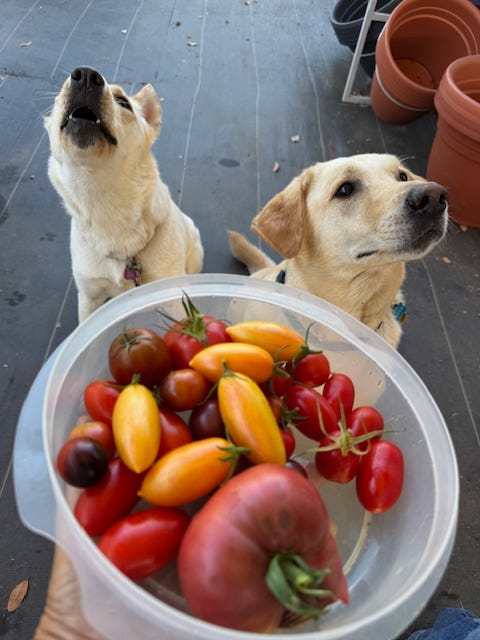
So right now, a large supply of vegetable starts are out for sale right now at the nursery. A full list of what vegetables will be available over the next 2 months is on our website now (click here to see the list). We only have tomatoes, peppers and eggplants available right now, because it really is too early to plant the very warm season vegetables like watermelon and cucumbers. But all the veggie starts will be available soon. Be patient, as we seed each of the varieties that we sell and we seed in small batches, so we do temporarily run out, especially with the unusually warm weather and higher early demand.
Tomatoes are our most popular vegetable we grow, so here is a FAQ sheet to remind you about the basics of tomato growing.
Tomato Gardening Tips
1. When planting tomatoes, work the soil well to encourage plants to send down a good root system.
2. For best flavor, allow tomatoes to develop on the plant to their full color before picking.
3. On determinate plants, let suckers grow. On indeterminates, decide how many “main” stems you want, and pinch off some suckers after you’ve got that number on each plant. That will also increase air circulation.
4. Prevent blossom end rot by keeping the soil evenly moist and by adding a tablespoon of Epsom salts to the hole at planting time. Calcium will also help prevent this problem.
5. In cold climates use row covers or Wall O’ Waters to protect tomato transplants from frost and improve yield.
6. Tomatoes love plenty of sun. Plant in the sunniest location and they will produce faster and be more prolific.
7. To develop strong stems, place a fan over tomato seedlings for up to 10 minutes a day, at least twice a day. This will also improve air circulation and keep many fungal diseases at bay.
8. Plant tomatoes on their side (horizontally in a trench) or up to their first set of leaves in a deep hole. Roots will develop all along the underground stem to help plants suck up moisture.
9. Tomato varieties, such as Oregon Spring, Early Girl, and Stupice, are bred to develop fruit early and are perennial favorites.
10. Seedlings require plenty of light. Use a grow light (up to 18 hours per day) or keep them in an area that receives plenty of direct sunlight.
11. If seedlings become tall and weak (leggy) they need more light. To remedy, lower grow lights to two inches above plants and cool grow room temperature to around 65 degrees F.
12. When purchasing tomato plants for your garden, look for healthy green plants with thick stems and no tomatoes or flowers.
13. To reduce insect and disease problems, rotate tomato plants so that they are grown only once in the same spot every three years.
14. If a heavy frost is expected, harvest all tomatoes, including green ones, which will eventually ripen while kept in storage.
15. Like most garden plants, tomatoes prefer rich, fast-draining soil that has been amended with plenty of organic compost or well-aged animal manure.
16. Keep out of the garden when the soil is wet to avoid compacting the soil.
17. As plants approach 3-feet tall, remove many of the leaves from the bottom 1-foot of the stem. These leaves receive very little sunlight and are often the first to develop fungal problems.
18. A layer of organic mulch (compost, leaves, grass clippings) will help deter weeds and keep moisture levels constant. Add mulches after soil has had a chance to warm up.
19. Weekly applications of compost tea may ward off many fungal diseases. A light application of worm castings once or twice during the growing season will also help.
20. Thin strips of cloth or old pantyhose make great ties for tomato plants. Begin attaching plants to stakes when the stem is about a foot tall.
21. Start seedlings indoors 6-7 weeks before you plant outside. Transplant outdoors when the soil has warmed and there is no longer danger of frost.
22. Space tomato plants far enough apart (1-1/2 - 2 feet) to allow for plenty of sun and promote good air circulation.
23. Transplant tomatoes during ideal conditions - late afternoon, cloudy days, or shortly after a rain.
24. Tomatoes grown in containers will dry out faster than in the garden. Keep potting soil moist, but not soggy.
______________________________________________________________________________________
Cannabis: It’s an Herb and we have a class on March 28th to learn how to grow it!
People used to joke with us about having an ‘herb’ farm. Or ask us how to resolve an insect problem on their ‘friend’s’ pot plant. Right. Well, cannabis is legal now and we have the experts, Penny Barthel and Emily Gogol, coming to teach how to properly grow it in your garden!
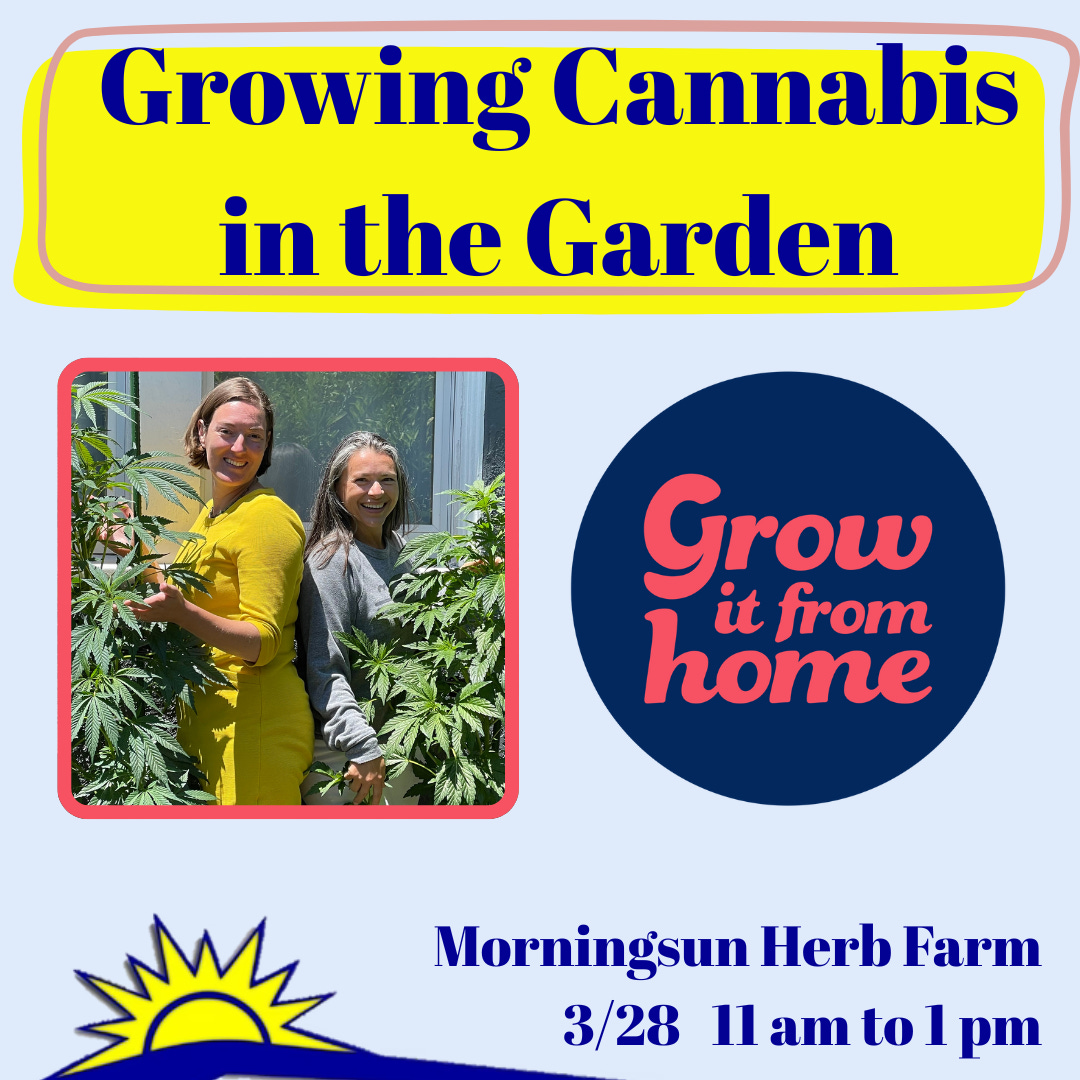
‘Growing Cannabis is the Garden’ is this coming Saturday, March 28th, from 11 am - 1 pm. We have a limited number of openings left, find out more information and sign up here. Books will be available for purchase, as well as ‘feminized’ seed which will guarantee female plants.
______________________________________________________________________________________
Projects at the Nursery
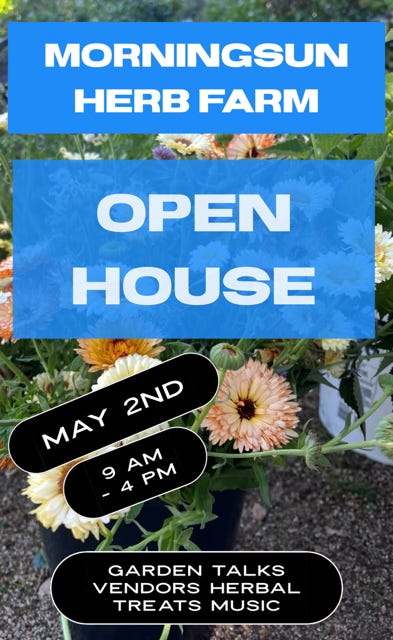
For the next 5 1/2 weeks, we are preparing for our annual Open House at the nursery. Save the date of May 2nd for a fun, delicous, educational day out at the herb farm, with lots of great talks, music, food and local vendors! Class list is coming soon!